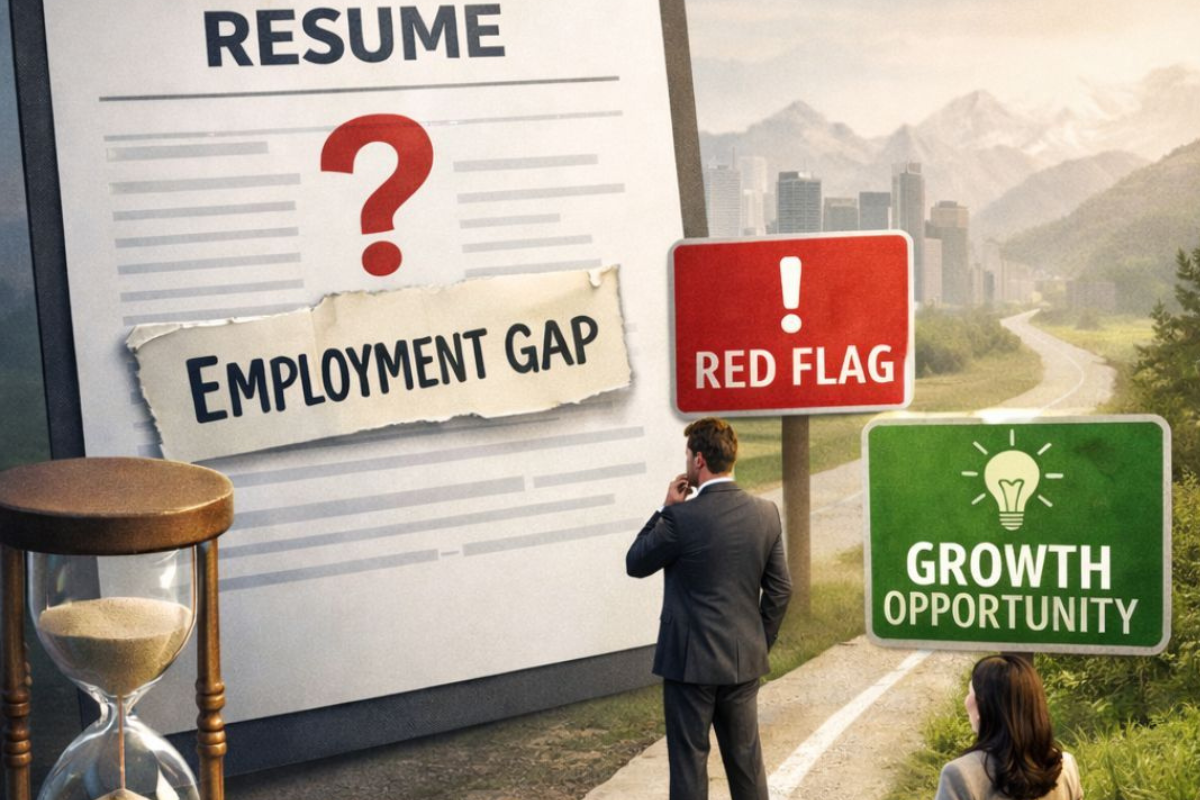
Often candidates are worried about the work gap in their resume and they ask this question –
“𝐖𝐢𝐥𝐥 𝐭𝐡𝐢𝐬 𝐠𝐚𝐩 𝐨𝐧 𝐦𝐲 𝐫𝐞𝐬𝐮𝐦𝐞 𝐤𝐢𝐥𝐥 𝐦𝐲 𝐜𝐡𝐚𝐧𝐜𝐞𝐬?”
The honest answer? It depends on how you own it.
For a long time, a gap was seen as a “red flag” a sign of flickering commitment or a lack of market demand. But the landscape has shifted. Today, organizations are increasingly looking for resilience and authenticity over a “perfect” linear timeline.
Here is the reality of how the industry sees it:
𝟏. 𝐃𝐨𝐞𝐬 𝐢𝐭 𝐦𝐚𝐭𝐭𝐞𝐫?
Yes and no. It matters less to the modern HR leader and more to the “traditional” hiring manager. However, the length of the gap matters less than the narrative behind it. A gap without a story creates doubt; a gap with a purpose creates character.
𝟐. 𝐇𝐨𝐰 𝐝𝐨 𝐨𝐫𝐠𝐚𝐧𝐢𝐳𝐚𝐭𝐢𝐨𝐧𝐬 𝐬𝐞𝐞 𝐢𝐭?
Top-tier firms now view “career breaks” through two lenses:
The Risk Lens: Did they lose their edge? Are they “un-hirable”?
The Growth Lens: Did they recharge? Did they gain perspective? Did they handle a life challenge (caregiving, health, travel) with maturity?
𝟑. 𝐖𝐡𝐲 𝐛𝐞𝐢𝐧𝐠 “𝐭𝐨𝐨 𝐟𝐫𝐚𝐧𝐤” 𝐜𝐚𝐧 𝐛𝐚𝐜𝐤𝐟𝐢𝐫𝐞?
We often hear “just be honest.” But in executive search, there is a difference between honesty and over-sharing.
The mistake: Dumping personal trauma or venting about a previous toxic boss.
The fix: Frame the gap as a deliberate choice or a necessary transition. You don’t owe anyone your medical history, but you do owe them a professional summary of your current readiness.
𝟒. 𝐈𝐬 𝐢𝐭 𝐚 𝐝𝐞𝐜𝐢𝐬𝐢𝐨𝐧-𝐦𝐚𝐤𝐢𝐧𝐠 𝐩𝐨𝐢𝐧𝐭?
In a tie-breaker between two identical candidates, the person who can explain their gap with confidence and tie it back to their “why” often wins.
Why? Because it shows emotional intelligence.
Candidates don’t need to worry, but they do need to prepare. Stop hiding the gap. Don’t apologize for it. Mention it, frame it, and then pivot immediately to why you are the best person for the job today.